
Paris Marathon 2026: Cup-Free, Bottle-Free Aid Stations — A World First in Road Running
 © ASO / Marathon de Paris
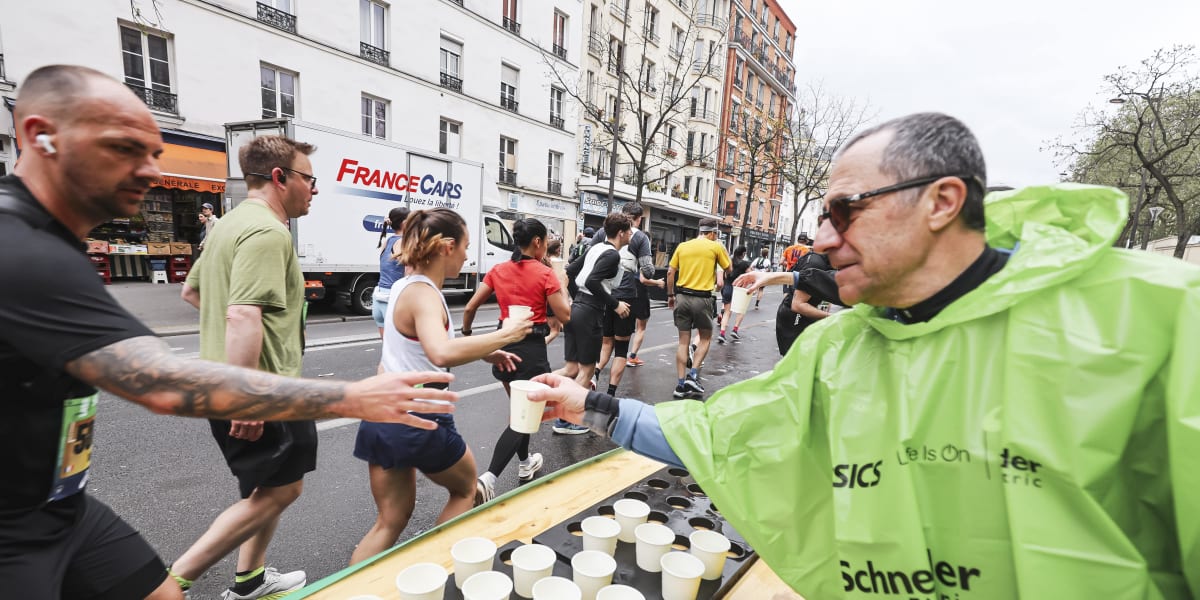
The 2026 Paris Marathon is about to make history. Starting with next year’s edition, on April 12, runners will find no plastic bottles or paper cups at aid stations. Instead, every participant will be required to carry their own hydration container — a world first for an event of this scale, with over 55,000 finishers in 2024. It’s an ambitious environmental shift that could inspire other major races across the globe.
No More Disposable Cups
The 49th edition of the Paris Marathon is set to be a turning point in the running world. Amaury Sport Organisation (ASO), the French company behind the race, has decided to take its environmental commitments even further. From 2026 onward, every runner must start with a personal hydration system — whether that’s a soft flask, collapsible cup, or hydration pack.
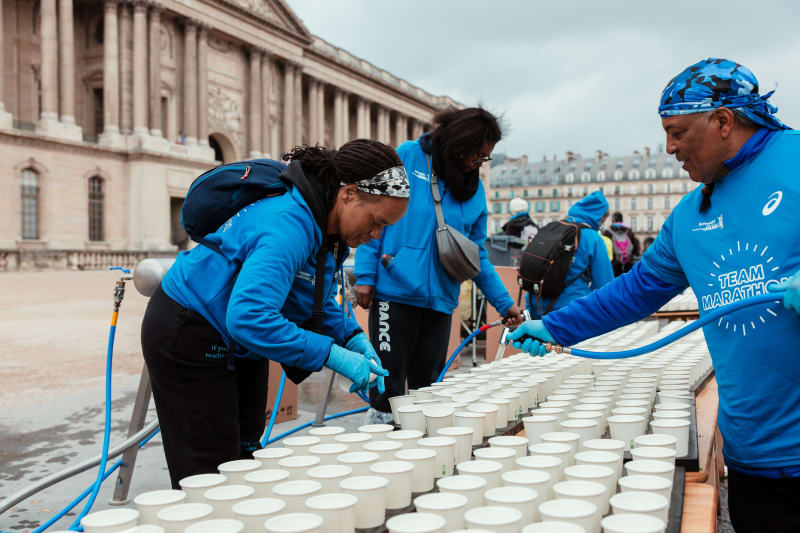
That means the end of those familiar scenes of thousands of discarded cups scattered across the pavement at aid stations.
The change has been phased in over several years. Plastic bottles were eliminated in 2024, replaced by paper cups — which runners quickly adopted. But those, too, will soon disappear as the event moves to a fully reusable model.
 © crédit photo
 © ASO
© ASO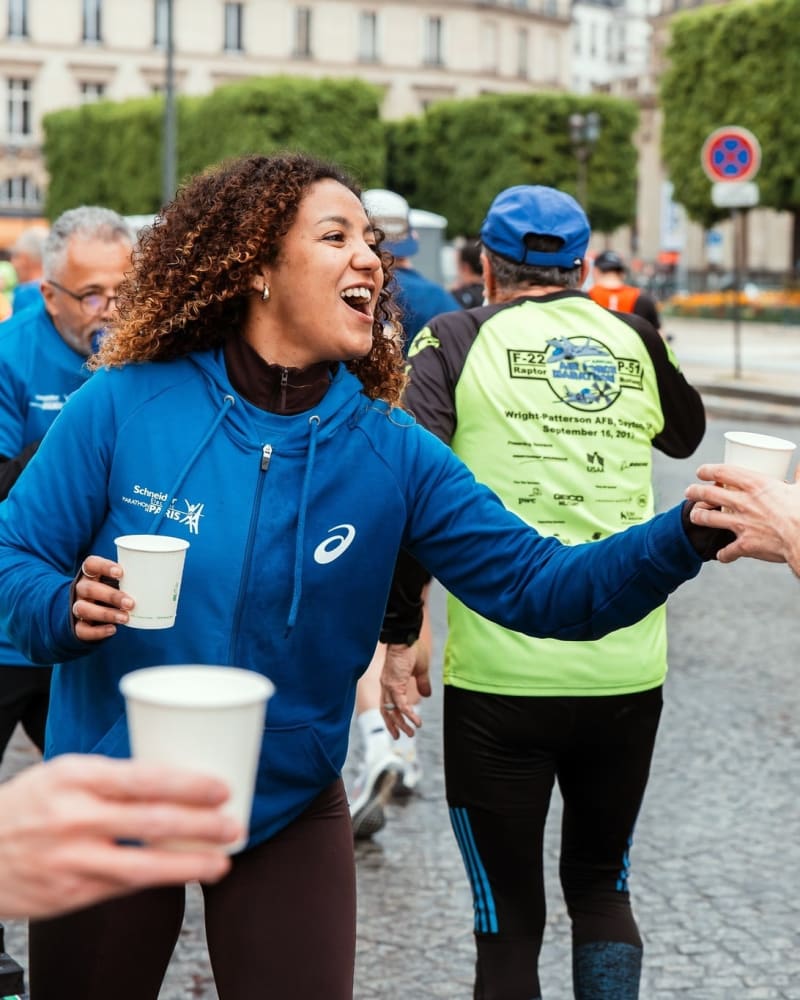 © ASO
© ASO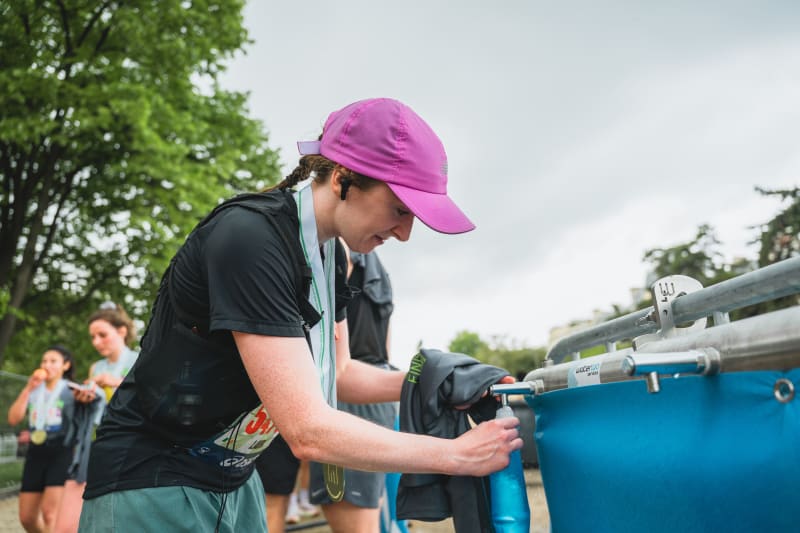 © ASO
© ASOA System Designed to Keep Runners Moving
Aid stations are critical moments in any marathon — and often a source of stress. Focused on maintaining pace, runners must slow down and veer off their line to grab a quick drink from volunteers. In just a few seconds, they have to refuel, rehydrate, and get back into rhythm — all while avoiding collisions.
Hydration, however, is vital to performance: it helps prevent overheating, delays cramps, and can save precious seconds on the clock.
So how can you stay hydrated efficiently without disposable cups? Organizers say they’ve found a solution:
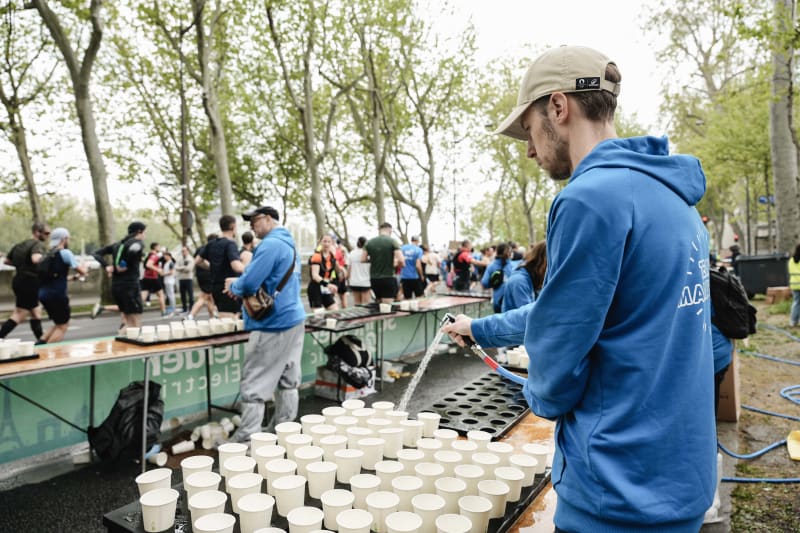
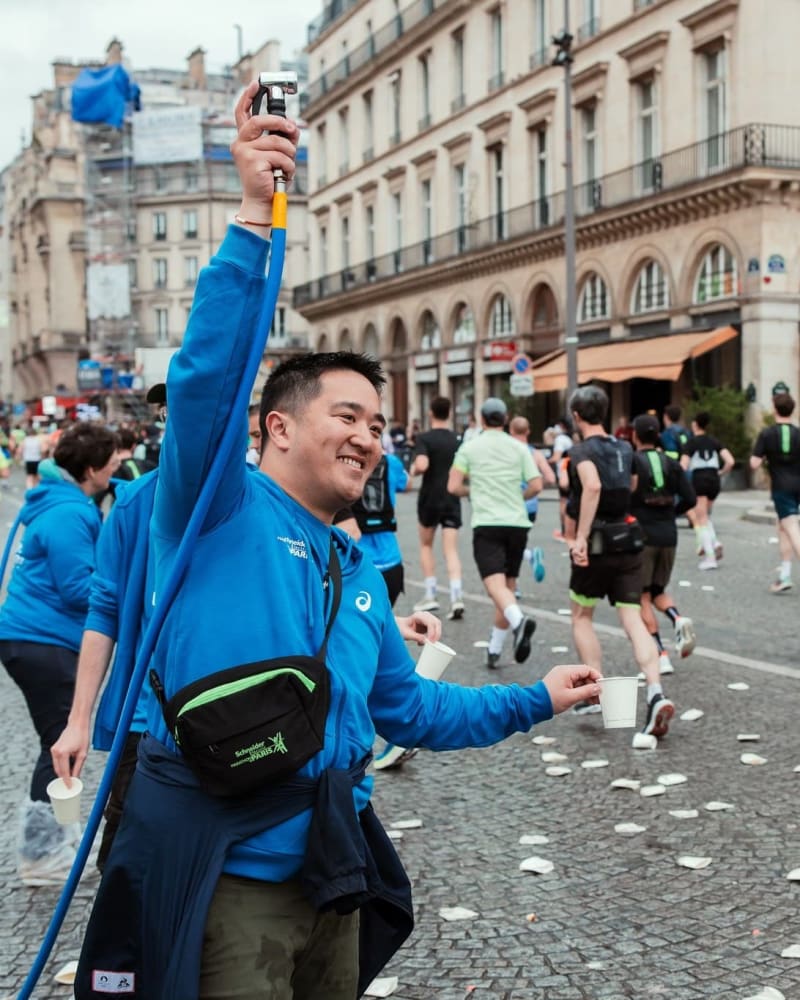
➔ Volunteers will help refill runners’ personal containers quickly.
➔ High-flow push-button fountains will fill a 350–400 ml soft flask in under two seconds.
➔ The number of water points will increase, with aid every 2 to 2.5 km from the halfway mark onward — to prevent crowding and queuing.
The system will get its first large-scale test this Sunday, October 5, during the Lyon Marathon, before its full rollout on the streets of Paris next year.
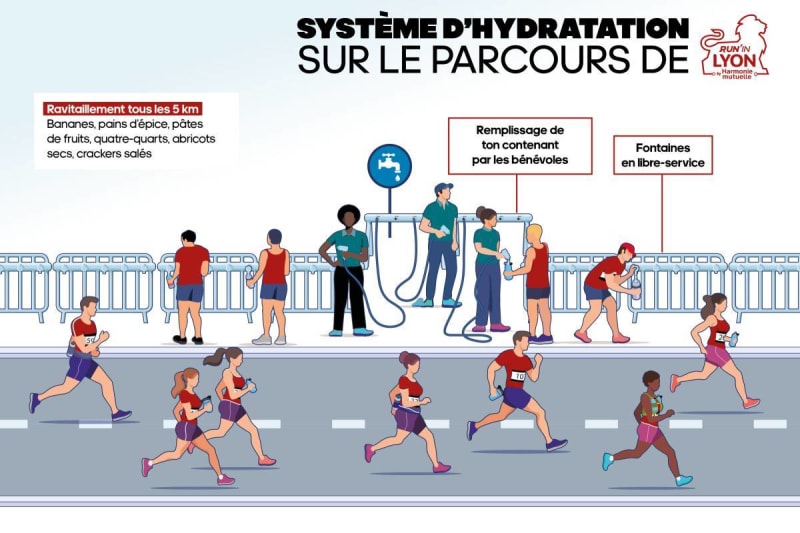 © The new water supply system will be tested during the Lyon Marathon on October 5. © ASO
Making the Paris Marathon Greener
This initiative is part of a broader goal: to minimize the event’s environmental footprint. In 2026, finishers will even have the option to skip the traditional finisher’s T-shirt and instead fund the planting of a tree — a symbolic yet meaningful gesture that reflects ASO’s intent to go beyond surface-level changes.
In recent years, ASO has multiplied its sustainability efforts, and the Paris Marathon is no exception. The event follows an ambitious corporate social responsibility (CSR) strategy. Since signing France’s Charter for Sustainable Major Events in 2017, it has worked to reduce waste, water use, and energy consumption, promote sustainable transport, and foster inclusion and solidarity within the running community.
 © ASO
© ASO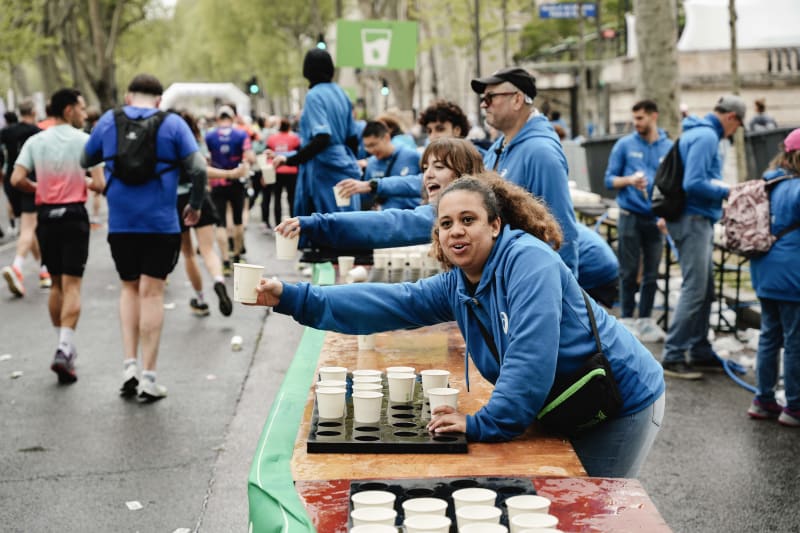 © ASO
© ASO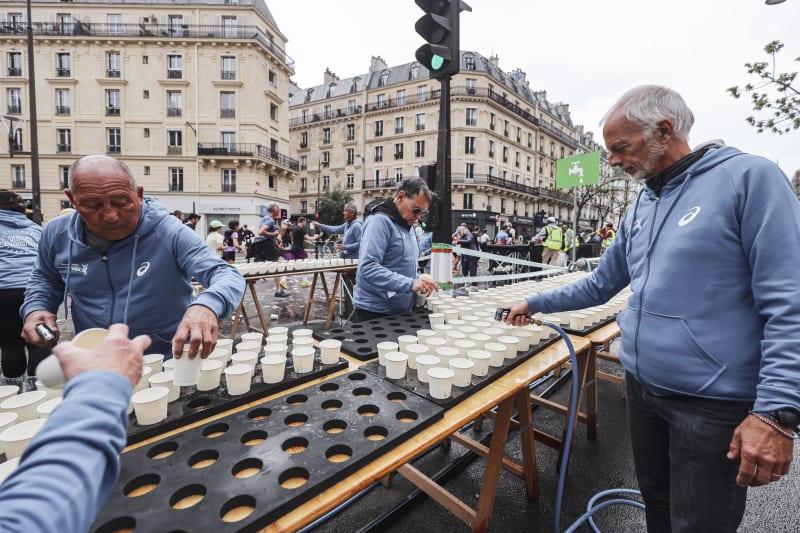 © ASO
© ASO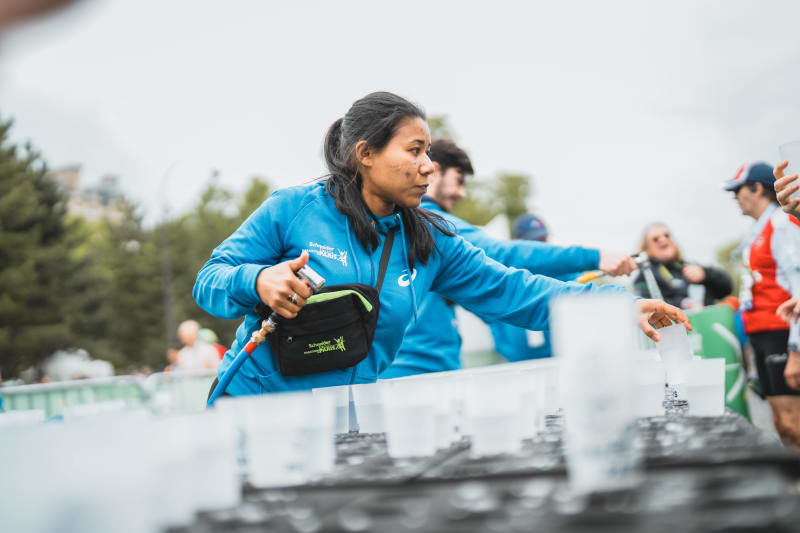 © ASO
© ASOA New Habit for Runners
While this approach is already common in trail running, it represents a major shift for road runners and marathoners. Hydration will now become something to plan ahead: choosing the right container, practicing with it, and ensuring it’s comfortable and accessible mid-race.
Because in a marathon, every second counts — and hydration is key to maintaining performance.
The 2026 Paris Marathon will thus serve as a real-world experiment. Race organizers around the world will be watching closely to see whether this bold, eco-conscious model could become the new standard. For runners, it’s a small change in habit — but one that could make the sport more sustainable, without sacrificing performance.